The Pause Before the Punchline
The pause before the punchline can reset expectation and sharpen a comic turn; learn how breath, movement and audience response shape its timing.
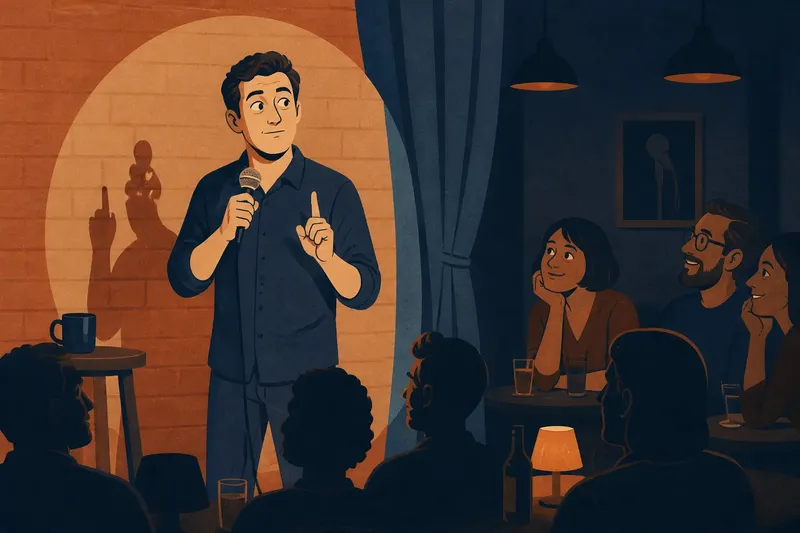
The pause before the punchline works when it changes what the audience expects next. Hold a beat after “I brought a map” and listeners may picture careful preparation; follow with “It’s a drawing of my dog’s route to the bin” and the turn has somewhere to land. Leave the same silence after every line, though, and it becomes a habit rather than a choice.
Expectation in motion
A joke sets up a small prediction. The audience hears a phrase, reads a face or watches a gesture and starts filling in what might follow. A pause can let that prediction settle before the punchline redirects it.
The useful question is not “How long should I wait?” but “What do I want them to anticipate?” If the setup has already made its direction obvious, delay may only underline the route. If it has offered two plausible readings, a beat can give the audience time to choose one before you overturn it.
Try the line aloud with different intentions. A speaker who pauses as if about to confess creates a different expectation from one who seems to be searching for a word. The words may stay fixed; the imagined next moment changes.
Silence has a shape
A stage pause is not empty. It can contain a held gaze, a breath that catches, a hand still hovering over a prop, or a glance towards the person who has just been mentioned. Each gives the audience something to read while the speech stops.
Stillness often makes a pause feel deliberate. But movement can do the work too: placing a mug down with fussy care may stretch a moment without making the performer look as if they have forgotten the next line. Choose one clear physical action rather than a string of nervous adjustments.
Imagine a character has just announced, “I’m very good at keeping secrets.” They carefully turn a notebook face down, then look at it again before delivering the next line. That small action can raise curiosity; the punchline now follows a visible attempt to hide something, rather than an arbitrary gap.
Breath and delivery
Actors sometimes confuse a timed pause with holding their breath. That can tighten the voice and make the next line sound pushed. A quiet, ordinary breath keeps the body available while the audience waits.
Mark the pause in rehearsal as an intention, not a stopwatch count. “Let them notice the stain” is more playable than “wait two seconds”: the first instruction responds to the room and the scene, while the second can leave you counting instead of performing.
Keep the next line ready in the mouth. If you have to search for it, the pause may read as uncertainty. If you know exactly where the thought is going, you can stay present and still allow the audience their moment.
When does the pause help?
Should I pause after the setup?
Only if the setup gives the audience something to predict, notice or reconsider. If the sentence already runs cleanly into its punchline, an added gap can interrupt the thought rather than sharpen it.
How do I know when to speak?
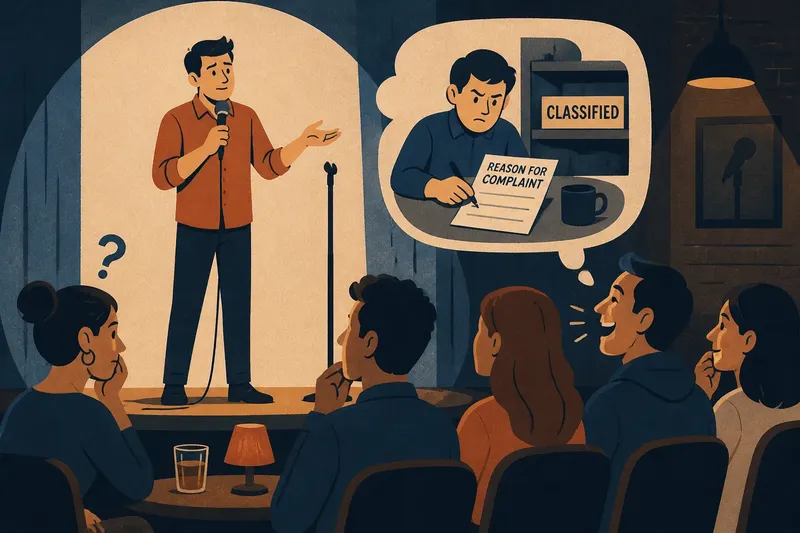
Listen for the room’s response and watch faces, not just the loudest laugh. A small recognition may show that the line has registered even when nobody laughs aloud; continue when the audience has had time to receive the turn.
What if the audience laughs early?
Let the laugh breathe instead of speaking over it. The next line should arrive when it can be heard, but do not tack on a fresh pause afterwards simply because the previous moment drew a response.
Can a pause work without a laugh?
Yes. It may make a character’s discomfort, confidence or misjudgement legible even if the line earns a quiet response. That can serve the scene, though it does not mean every silence has comic force.
Reading the room
Audience response changes the usable space around a line. A laugh can cover the next words; a hush can make a tiny shift of expression unusually visible. Neither response should be treated as a cue that always arrives on schedule.
In a small room, a held look may carry clearly. In a noisy bar, the same look can disappear, so a deliberate physical action or a firmer vocal change may communicate the beat better. Adjust what the audience can perceive rather than stretching the silence until it feels conspicuous.
For a useful rehearsal, run the scene with a partner who does not know the punchline and ask what they expected during the pause. Their answer can reveal whether the silence is building a specific anticipation or merely announcing that a joke is coming.
Revising the beat
When a pause feels flat, first check the setup and the performer’s focus. The intended expectation may not be clear, or the gaze may drift before the punchline. Adding more silence cannot repair a missing thought.
Try removing the pause altogether, then restore only the moment needed for a look, breath or change in direction. If the line becomes clearer and livelier without a gap, keep it moving. If the turn arrives too soon to register, give the audience a readable event to follow.
Keep the pause before the punchline flexible: its job is to shape expectation, not to promise a laugh. A specific thought, an available breath and attention to the room make that beat easier to play—and easier to cut when the joke no longer needs it.